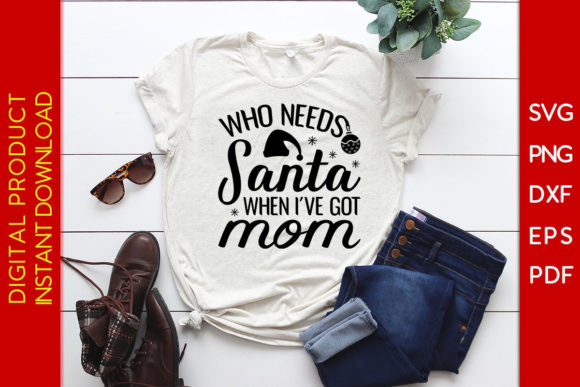
Who Needs Santa When I Have Got Mom Design Review
As a professional designer and product reviewer, I approach every new graphic with a critical eye toward its final stitched reality. When evaluating Who Needs Santa when I Have Got Mom, my first impression is one of immediate emotional resonance mixed with practical versatility. This design captures a specific sentiment that transcends generic holiday decor; it speaks directly to the personalized gift market and family-centric apparel. Visually, the layout suggests a balance between playful typography and seasonal charm, making it an ideal candidate for both digital cutting projects and machine embroidery adaptation. However, translating a vector graphic intended for cutting machines into a successful embroidery project requires careful consideration of stitch density, fabric texture, and commercial viability.
Evaluating Real-World Application on Custom Apparel
To truly understand the value of this design asset, I mentally placed it into a real-life production scenario: creating a custom embroidered sweatshirt for a boutique holiday collection. In this context, Who Needs Santa when I Have Got Mom serves as more than just a cute phrase; it acts as a high-conversion hook for Etsy sellers and small shop owners targeting mothers and children. The sentiment is perfect for matching sets or standalone statement pieces. When reviewing the graphics for this application, I look at how the lettering will translate from screen to stitch. If the original SVG features intricate serifs or thin lines, these must be adapted into satin stitch or running stitch columns that won't disappear into fleece or french terry fabric.
For a sweatshirt embroidery project, the design needs sufficient weight to anchor into the fabric without causing puckering. I envision this working beautifully as a center-chest placement or a larger back print. For craft business owners, this specific phrasing offers excellent "giftability." Customers aren't just buying a shirt; they are buying a validation of motherhood during the chaotic holiday season. This emotional connection increases perceived product value and buyer engagement, provided the execution is flawless. The transition from a digital cut file to a finished product hinges entirely on respecting the limitations of thread versus vinyl.
Navigating Fabric Limitations and Hoop Constraints
While the sentiment is universally appealing, the physical application of Who Needs Santa when I Have Got Mom demands caution in specific scenarios. As an experienced embroiderer, I must warn against using unmodified versions of this design on highly textured fabrics like terry cloth towels or loose-knit beanies unless proper underlay is established. Textured fabric can swallow fine details, turning crisp typography into illegible bumps. Similarly, stretchy fabrics require significant stabilization to prevent distortion. If you are planning baby embroidery or items for infants, safety and comfort are paramount; dense fill stitch areas can create stiff, scratchy patches against sensitive skin. In these cases, modifying the design to use lighter running stitches or applique techniques is often necessary.
Hoop size is another critical factor. This design likely has a horizontal aspect ratio given the length of the phrase. Makers must confirm their machine’s maximum stitch area before purchasing. Attempting to shrink a complex text design to fit a 4x4 hoop often results in thread breaks and poor registration. Conversely, stretching it too large for a cap or pocket can distort the proportions. For curved surfaces like caps, flat vector graphics rarely digitize well without specialized distortion compensation. I always advise testing on scrap fabric first. Check whether the design maintains its visual personality when scaled down for a sleeve cuff or scaled up for a tote bag design. If the letters become too thin or the spacing collapses, the design is not suitable for that specific scale.
Commercial Viability for Digital Sellers and Makers
For those in the business of selling design assets or finished handmade products, Who Needs Santa when I Have Got Mom represents a strong niche opportunity. However, professionalism dictates due diligence. Since the product description specifies formats like AI, SVG, DXF, EPS, PNG, and PDF primarily for cutting machines, embroidery entrepreneurs must verify licensing terms before digitizing this for commercial embroidery sale. Never assume a cut file license covers embroidery redistribution. For Etsy sellers listing finished goods, this design pairs exceptionally well with printable mockups to showcase potential colorways without stitching every variation.
Visual appeal drives sales, but consistency builds trust. When using this graphics package across multiple products—perhaps a holiday embroidery set including aprons, pillow covers, and tea towels—maintain consistent thread colors and stabilizer choices. A patchy, inconsistent look devalues the brand. For digital product sellers offering the digitized version, ensure your listing clearly states the tested hoop sizes and recommended fabric types. Buyer engagement drops significantly when customers encounter unexpected stitching issues. By providing detailed notes on stitch density and thread contrast, you elevate your shop from a simple vendor to a trusted resource for creative entrepreneurs.
Essential Designer Notes for Successful Execution
Before loading Who Needs Santa when I Have Got Mom into your machine or listing it in your shop, adhere to these practical guidelines derived from professional review standards:
- Verify File Compatibility: Confirm that the provided EPS or PNG files are high-resolution enough for auto-digitizing software if you are converting them yourself. Low-res vectors result in jagged stitch paths.
- Test Stitch Density: Always run a sew-out on the exact fabric you intend to sell. Fleece requires different density settings than cotton quilting fabric. Adjust pull compensation to account for fabric push-and-pull.
- Check Thread Color Contrast: This design relies on readability. Test white thread on cream fabric or red thread on maroon fabric. If the contrast is low, the message gets lost. Use black and white mockups to verify value contrast before committing to thread.
- Stabilizer Selection: Do not skimp on stabilizer. For knit apparel, use cut-away stabilizer to maintain shape through washing. For woven tote bags or aprons, tear-away may suffice, but test for residue.
- Licensing Compliance: Re-read the license included with the digital file. Ensure you have the right to sell physical embroidered items versus digital embroidery files. These are distinct commercial rights.
- Detail Inspection: Zoom in to 400% in your embroidery software. Look for overlapping stitches, unnecessary jumps, or tiny satin columns under 1mm that might cause needle breaks. Clean up the pathing before production.
- Mockup Accuracy: When creating listings, use realistic shadows and fabric textures in your printable mockup. Customers need to visualize the final product accurately to reduce return rates.
Ultimately, Who Needs Santa when I Have Got Mom is a charming and commercially viable design for the holiday season, provided it is treated with technical respect. Whether you are crafting a personalized gift for a loved one or building a seasonal inventory for your craft business, success lies in the details. By understanding the interplay between digital graphics and physical embroidery constraints, you transform a simple vector file into a cherished, high-quality finished product that resonates with buyers and recipients alike. Always prioritize testing and quality control to ensure your handmade products reflect the excellence your customers expect.